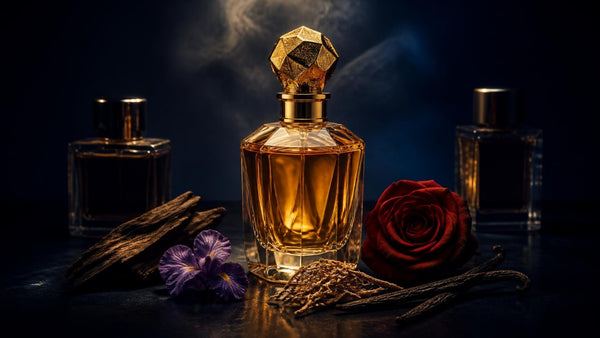
Niche, Designer or Dupe? What Really Separates Them, and Why Niche Wins Hearts
The three worlds of perfume explained honestly: what you pay for in each, where alternatives fall short, and why so many people who try niche never look back.
Walk into any perfume shop and you are choosing between three different worlds, even if nobody tells you so. The big fashion names on the front shelves. The quieter houses with heavy bottles and names you may not recognise. And, online, the cheaper bottles that promise to smell "just like" a famous fragrance. They can look alike. They are not built the same way, and once you know the difference you never shop the same again.
Designer: perfume made to please millions
A designer fragrance carries the name of a fashion or luxury house: Dior, Chanel, Armani, Yves Saint Laurent, Versace and many more. For most of these houses perfume is one business among several, and the fragrances are often developed and produced together with large beauty groups.
- The goal: a scent that as many people as possible will like on the first spray.
- The process: new launches are usually tested on consumer panels before they reach the shelf.
- The reach: sold everywhere, from malls to airports, with big advertising campaigns and famous faces.
- The rhythm: frequent new versions of a best seller: Intense, Elixir, Parfum, summer editions.
None of this makes designer fragrance bad. Some of the most loved perfumes in history are designer creations, and a great designer scent is easy to wear and easy to like. Its strength is also its limit: a fragrance made to please everyone rarely surprises anyone, and you will smell it on many people around you.
Niche: perfume as the main event
A niche house is built around perfume itself. Fragrance is the heart of the business, not an extension of a clothing label. Houses such as Amouage, founded in Oman in 1983, Frédéric Malle, which in 2000 began printing the perfumer's name on the bottle, and Maison Francis Kurkdjian, founded in 2009, are typical of this world.
- Creative freedom: the perfumer is often free to follow an idea instead of a market test. That is why niche dares with smoky, leathery, resinous or unusual accords.
- The materials: many niche houses are known for generous use of high-quality raw materials such as iris, oud, rose, sandalwood and ambergris accords.
- The story: each fragrance usually starts from a place, a memory or an ingredient, and you can feel the idea behind it.
- The rarity: smaller production and selective distribution. You will not meet your perfume on every second person.
Good to know: some designer houses also have "exclusive" or "private" lines, such as Tom Ford Private Blend, Les Exclusifs de Chanel and La Collection Privée Christian Dior. They are made in a niche spirit, with richer materials and smaller distribution, under a designer name.
Dupes and alternatives: the copy, not the idea
A dupe, often sold as an "alternative" or "inspired by" fragrance, is made to smell like a famous perfume at a fraction of the price. Laboratories can analyse a fragrance with instruments such as gas chromatography and rebuild a close version of its profile. So what is missing?
- The journey: a good fragrance changes over hours, from the opening to the heart to the base. Dupes usually copy the first impression best. The later hours, where the expensive materials live, are where the difference shows.
- The materials: to reach a low price, costly naturals are usually replaced with cheaper substitutes. The outline is there; the depth often is not.
- The consistency: longevity and quality can vary from one batch to the next.
- The originality: you are wearing someone else's idea, one step behind it.
An alternative sold under its own name is a different thing from a counterfeit, which copies the original brand's name and bottle to deceive the buyer. Counterfeits are illegal and can contain ingredients that are unsafe on skin. If you are unsure about a bottle, read our guide: How to Spot a Fake Perfume.
Why so many people fall for niche
- It becomes your signature. In a majlis, at a wedding or in the office, people remember a scent they cannot place.
- It tells a story on your skin. A niche fragrance often feels different in the first minutes, after an hour and late in the evening. Wearing it is an experience, not a single note.
- It respects the raw materials. Real depth, warmth and texture that cheaper formulas struggle to copy.
- It fits our taste. Oud, rose, amber, saffron and incense, the scents this region has loved for centuries, are where many niche houses do their best work.
- Fewer bottles, more joy. Many people find that one niche fragrance they truly love replaces several bottles they only liked.
How to start in niche
- Start from a family you already love: if you like woody or amber designer scents, begin with a niche woody or amber.
- Test on your skin, not only on paper, and give it a few hours before you decide.
- Judge it in the evening, not in the first minute. Niche often saves its best for later.
- Do not chase the most expensive bottle. Choose the one that feels like you.
The honest summary: designer is the easy, well-made favourite. A dupe is a reminder of something else. Niche is perfume as an art form, made for people who want to smell like themselves.
At Perfumes For Less every niche fragrance is original, sourced from the official agents and distributors in Saudi Arabia, shipped chilled, and priced fairly, so the step into niche is easier than you think.
Ready to find your scent?
Answer a few simple questions and get matches in 30 seconds.
More from the club
 PFL SCENT CLUB
35
The Best Luxury Vanilla and Amber Perfumes That Last in Saudi Arabia
November 2026
Seven warm, long-lasting vanilla and amber perfumes we love, how vanilla and amber smell in niche and designer fragra...
Read the article
 PFL SCENT CLUB
34
The Best Unisex Perfumes in Saudi Arabia
November 2026
What makes a perfume unisex, eight of our favourite shared scents across citrus, floral, oud, amber and musk, and sim...
Read the article
 PFL SCENT CLUB
33
How Does an Original Perfume Reach You in Saudi Arabia?
November 2026
Follow an original perfume step by step, from the fragrance house to the official agent in the Kingdom, to Perfumes F...
Read the article